
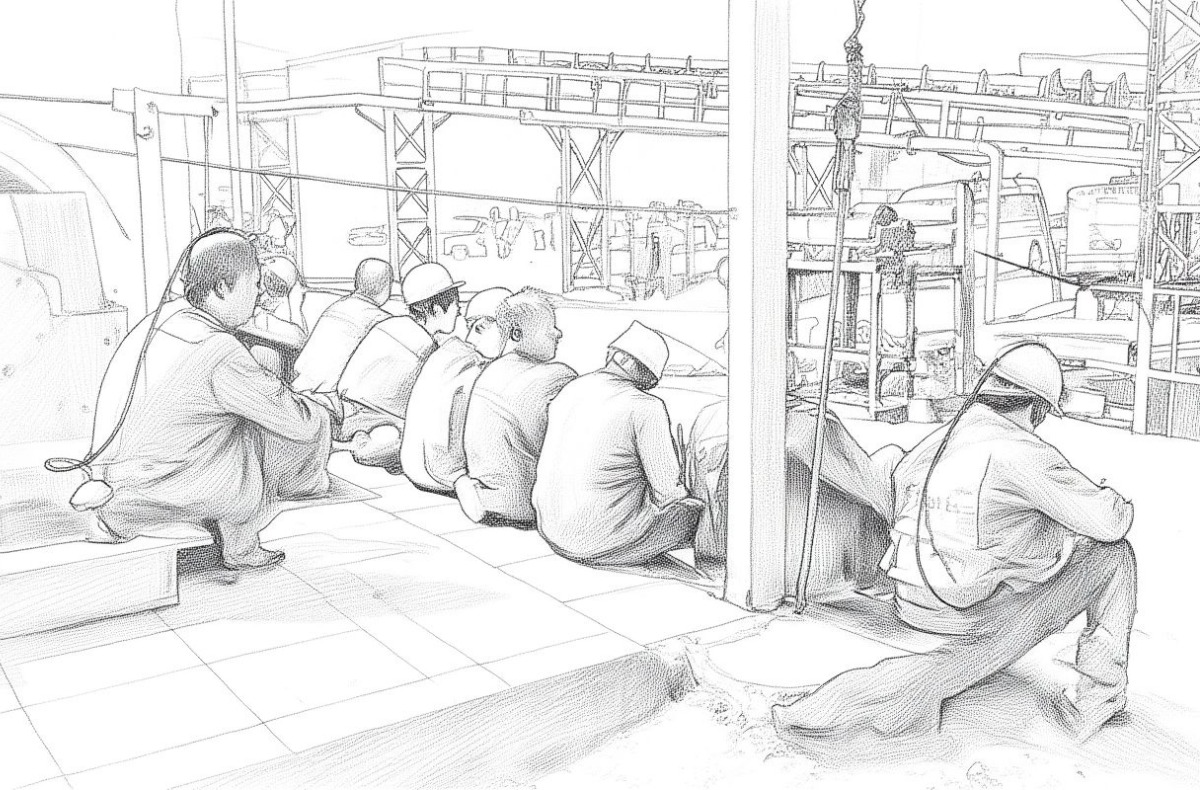
From oil platforms to coal mines, from elevator shafts to empty dinner tables—the daily reality of Iran’s workers
In the past day, reports emerged from ten different corners of the country—from Golestan to Bushehr, from Sabzevar to Asaluyeh. What they share is not location, not type of work, not even the scale of tragedy. What ties them together is the structure of entrenched injustice and rightlessness imposed on Iran’s working class—a structure that makes death routine, suicide understandable, and protest ineffective.
From the suicide of a Sadra Company worker on Q4 offshore platform after months without pay, to the painful death of Mojtaba Sa’adi in the brick-making machinery of Pey-Dezh factory in Kordkuy; from a fuel carrier killed by a landmine explosion, to a worker in Sabzevar falling into an elevator shaft. These are not isolated accidents; they are the most systematic killings without a killer, repeated daily.
On the same day, retired teachers from the 2021 cohort gathered in Tehran, saying that 46 months have passed and half their back pay remains unpaid. In the south, at the heart of the country’s gas industry, permanent workers on POGC operational platforms, in Kangan sites, and in Asaluyeh refineries staged protests—denouncing wage inequality, the misuse of pension funds, and the non-implementation of existing labor laws.
In Khuzestan, municipal workers in Shadegan had no option but to lay out an empty tablecloth in front of city hall—a symbolic act, yet more real than any slogan or placard. The empty table is proof of workers’ poverty—not in wartime, not in famine, but in the midst of “development plans” and “national budgets.”
In East Alborz, two thousand coal miners have been without insurance for months—their health cards void, their supplementary coverage cut, their medical expenses out of reach. One miner spent 51 million tomans from his own pocket to survive a heart attack. He lived—but no one knows which institution, if any, will make life possible for him.
In Tehran, a fire at a carpentry workshop on Enghelab Street spread to residential units. But the real problem wasn’t only the flames—it was unsafe workplaces where, when disaster strikes, the state only reports that the fire was contained, never why it started. And in Dashtestan Steel, a rolling machine fell, killing a 60-year-old master craftsman who had sold his skill to this country’s industry for decades.
A class no longer heard, only seen
These ten reports represent just one day in the lives of Iran’s workers. Workers who, in their own words, “even if they shout, no one hears; so they either die or stay silent.”
While the country’s wealth flows from gas fields and oil exports, and officials host grand “Resistance” conferences with billion-toman budgets, thousands of permanent, contract, day-wage, retired, and fuel-hauling workers still struggle for the most basic needs: wages, insurance, safety, and human dignity.
What we saw yesterday—on the oil platform, in the coal mine, in the brick factory, at the construction site, and on the empty table in front of Shadegan City Hall—is not the exception, but the rule.
This report is not a warning. This report is a mirror—reflecting what the authorities deliberately refuse to see.
Prepared by “Pezhvak-e Kar-e Iran” (Echo of Labor in Iran)


