
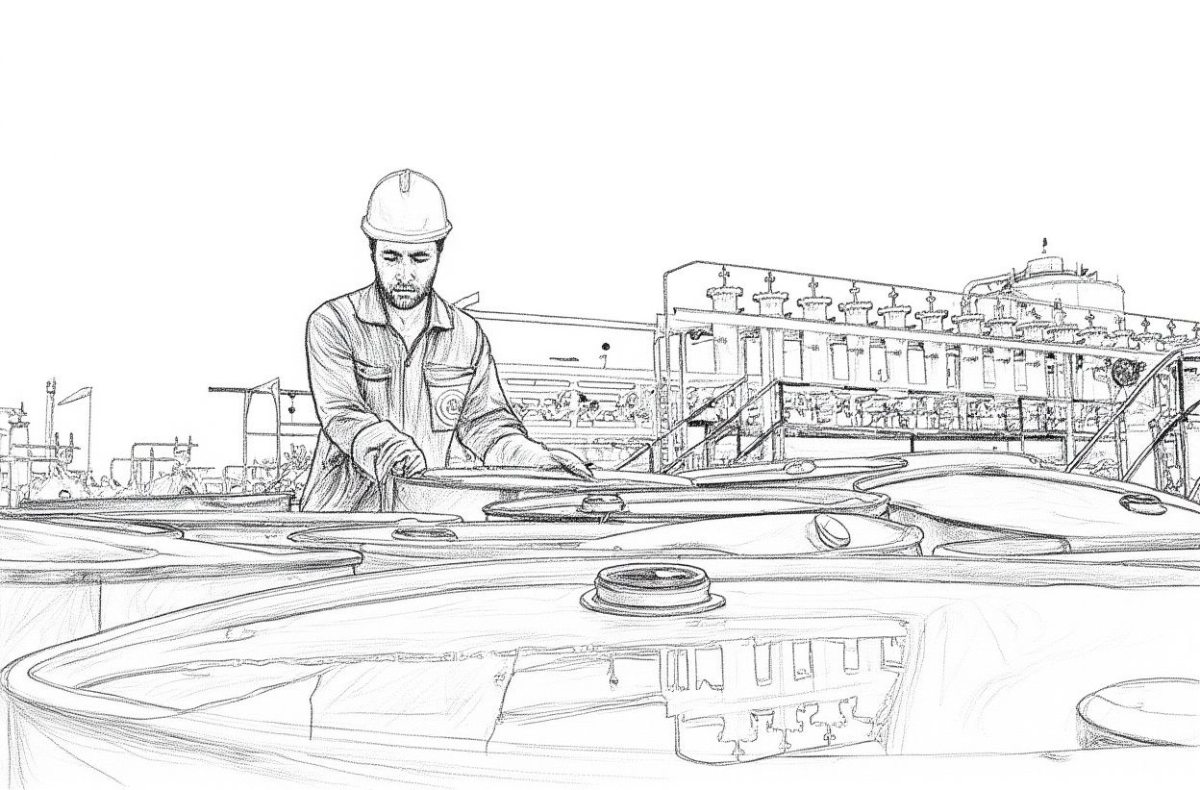
Today, once again, the page of workers’ and wage-earners’ lives in Iran was filled with blood, fire, protest, and grief. The deep fractures in the body of the working class could be heard not only from factories and worksites, but from homes, hospitals, and even the charred, darkened rooms of death.
The deaths continue: one burned, one fell, one took his own life
In Isfahan, another worker fell from height and died. In Tehran, amidst the flames, two Afghan migrant workers lost their lives. In Iranshahr, a falling power pole killed an electricity technician. And in Bushehr, a few days ago, another worker—crushed by the unbearable weight of unpaid wages and utter helplessness—hanged himself. Today, an analytical report on this tragic event was published, showing how the Sadra Company evaded all human and social responsibility, and how the subcontracting system leaves workers abandoned and alone, to die in silence.
These deaths are not accidents; they are part of a systematic process—slow killings born of a structure in which a worker’s life has no value, a structure that prefers profit over life, and domination over safety and human dignity.
Konarak nurses: ten months unpaid, ten months ignored
In Konarak, nurses at Imam Hossein Hospital, after months of silence under crushing pressure, took to protest today. Ten months without pay, unbearable workloads, and constant humiliation drove them into the streets. This protest was not only a cry for wages—it was a cry for dignity and the right to live.
Oil workers’ families take the streets; a day after a protest Monday
Yesterday, Tuesday, August 5, the families of operational oil industry workers in Jam gathered outside the Tohid Cultural Center. The protest was part of the “Protest Mondays” campaign, though it took place on a Tuesday. What matters is not the day of the week, but the persistence of anger—a wave of protest that has now spread from workplaces into homes. This shows the crisis is not confined to the job site—it runs through daily life itself.
Not just incidents, not just demands—this is a structural disaster
All of these cases have something in common: unpaid wages, lack of protection, no job security, and the devaluation of workers’ lives. This situation cannot be solved by advice, piecemeal reforms, or management changes. What we are facing is a structural catastrophe, rooted directly in the unequal political and economic relations of the ruling system.
The state, state-linked and private employers, parasitic contractors: evading responsibility, denying suffering
At the heart of these relations lies a network of brokerage, subcontracting, middlemen, and responsibility evasion. Major economic actors—from IRGC-owned companies and religious foundations to private capitalists and giant quasi-state corporations—share one common trait: the deep exploitation of workers and their own absolution from accountability.
Subcontractors are no less guilty—in fact, they actively participate in exploitation and repression. Linked to centers of power, they secure lucrative contracts through political connections, deliver no real work, swallow large portions of workers’ wages, and grow rich—parasitically—from workers’ suffering. Subcontracting in Iran is a systematized model of legal plunder: designed both to cut costs for the employer and to conceal political and legal responsibility.
The solution lies in fundamental change, not patchwork fixes
No demand within this framework will be heard, let alone met. The existing system is built on denying workers’ rights and granting immunity to both state and private capitalists. Ending this situation requires a fundamental transformation and a complete dismantling of the ruling order’s economic and political arrangements.
The key to liberation: independent organization and collective power
But change is impossible without power—and power comes from organization. Every day a worker remains without organization, isolated and desperate before the vast machinery of exploitation, they are driven toward loneliness, hopelessness, and ultimately death. But an organized worker is no victim—they are a force for change.
Independent organization, built from below and beyond the official, state-controlled structures, is the key to liberation. From the workplace to the neighborhood, from the oil field to the hospital, from workers’ housing to dormitories—wherever workers unite with their fellow sufferers, they lay the foundation for a power that can change destiny.
From the subject of suffering to the subject of resistance and transformation
An organized worker is no longer merely the subject of suffering, but the subject of transformation. And this is what the rulers fear most: a worker who is organized, united, and conscious is no longer a spectator to their own death—they become the main actor in shaping the future.
Prepared by “Pezhvak-e Kar-e Iran” (Echo of Labor in Iran)


