
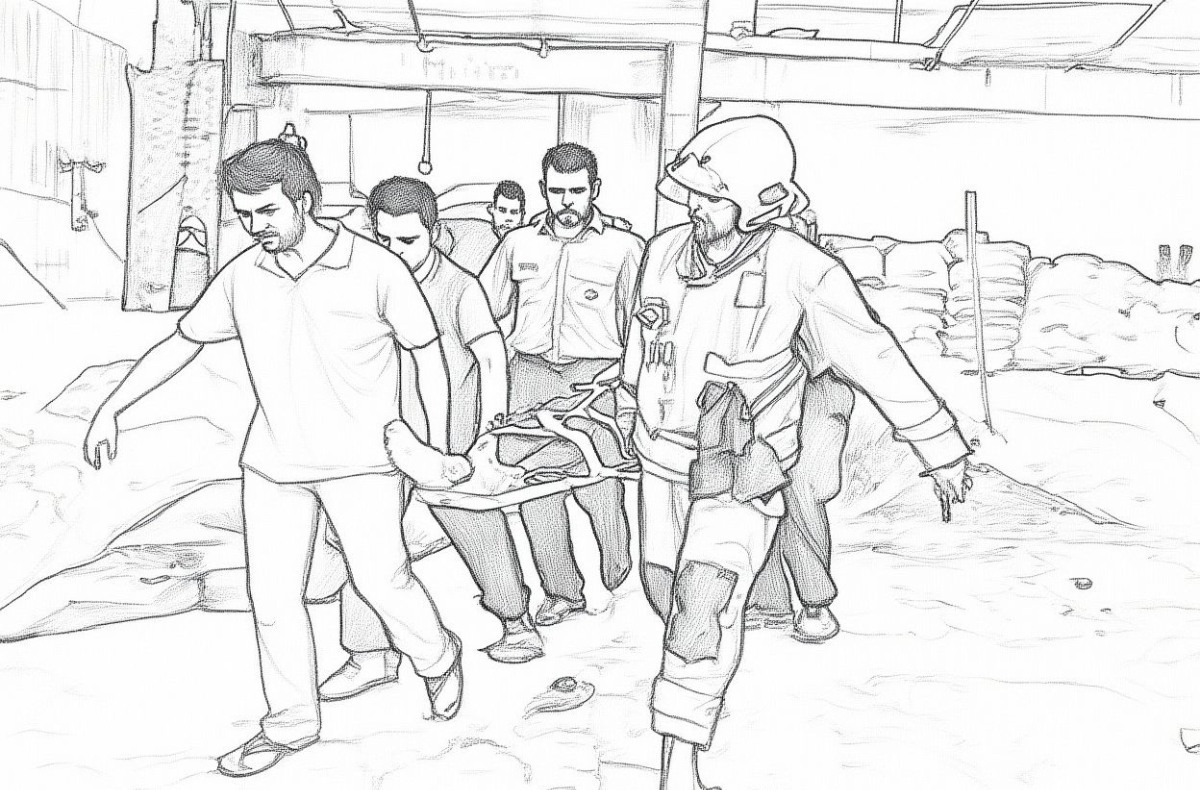
Today, in Iran, the reality of work, survival, and life was held in the calloused hands of thousands of men and women—some taking to the streets, some falling from heights, some burning in fires, and some staging sit-ins behind the locked doors of companies. Bitter, yet clear accounts of the systematic violence imposed on the working class.
Today, there were at least ten documented reports of protest, strike, death, and discontent in workplaces:
1. Second Day of Strike at Isfahan Steel’s Coke Production Unit
Workers in this key department shut down shifts and staged a sit-in in front of the administrative building to protest unpaid wages. Last night, they chanted slogans against the CEO as they left their shifts. Security is trying to break the strike through threats and bribes.
2. Attempted Suicide by an Unemployed Young Man in Gheyzaniyeh, Ahvaz
Protesting mass unemployment and job discrimination, a young man attempted self-immolation inside the district governor’s office. He represents a generation that sees no future within current policies.
3. Ninth Day of Strike at Tabriz Tractor Manufacturing’s Forging Division
Amid total silence from management and months of unpaid wages, the strike continues. A thousand workers are waiting for answers, but the CEO remains absent.
4. Death of an Electrical Line Worker in Jahrom
While repairing a nighttime power outage, Saeed Sa’adatian was electrocuted and fell to his death. Dying in silence, without safety equipment, is the direct result of disregard for the lives of public service workers.
5. Renewed Protest by Power Station Operators in Front of the Ministry of Energy
Main demands: end subcontracting, guarantee job security, and convert contracts to permanent status. The response? Silence, delays, empty promises. The same cycle has been repeating for years.
6. Ahvaz Travers Project Workers: Four Months Without Wages
In a project employing 15 workers, there has been no pay since April. Non-response, denial, and instability—that’s the reality of private companies managing critical railway projects.
7. Production Halt at Zahedan Rebar Plant
Workers at Pars Sistan Steel found the factory suddenly shut down without explanation. Back wages remain unpaid, and there are no alternative job opportunities.
8. Protest by Petropars Security Workers at the Azadegan Oil Field
With over 18 years of service, subcontracted security staff receive lower pay and fewer benefits than other workers. Today, they gathered to demand wage justice.
9. Four Months of Unpaid Wages for Zahedan Municipal Drivers
Contracted workers say a man named Hassan Keikha, head of financial affairs, has been withholding their wages without explanation, while the mayor claims he cannot resolve the problem. The workers are left with nothing but systemic wage theft.
10. Death of Three Fuel Carriers in Flames
In Chabahar, a fuel carrier vehicle overturned, and three fuel-hauling workers burned to death—an unsafe, forced, and dangerous job in a region where even the most basic employment opportunities are absent.
Conclusion: Unless the Existing Order Changes, the Tragedy Will Repeat
All of these accounts are fragments of a larger puzzle called structural oppression. In Iran, workers have no job security, no fair wages, no representative institutions, no tools for negotiation, and no real path for change. What exists instead is repression, silence, threats, death, strikes, and protests.
This goes beyond a few incompetent managers or a failed ministry—it is a deep, structural problem.
Until power is in the hands of the working class and the people, until the top-down decision-making system is dismantled, and until workers can build independent organizations and take control of their economic and political destiny, no reform will be real.
Minor adjustments within this decayed framework will lead nowhere. The time has come for fundamental transformation.
Prepared by “Pezhvak-e Kar-e Iran” (Echo of Labor in Iran)


